
Delhi School of Business (DSB), Delhi
Delhi
On this page50 sections
Delhi School of Business (DSB) is a management institute located in Pitampura, Delhi, offering AICTE-approved postgraduate management programmes. DSB focuses on practical, industry-oriented management education through case studies, fieldwork, experiential learning, industry interaction and continuous assessment.
The institute currently offers a two-year full-time PGDM (General) programme and a specialized PGDM (Fintech) programme. For the 2026–28 batch, DSB lists an approved intake of 180 seats for PGDM (General) and 30 seats for PGDM (Fintech).
DSB's curriculum is designed to combine core management concepts with contemporary areas such as Business Analytics, Finance, Marketing, Operations, Human Resources, Digital Business and FinTech.
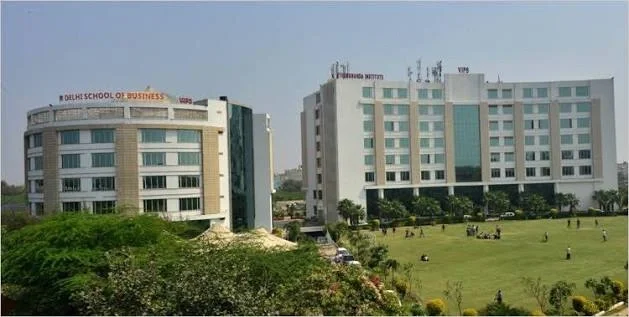
The institute is located at AU Block, Outer Ring Road, Pitampura, Delhi – 110034, providing students access to the wider Delhi-NCR corporate ecosystem.
Delhi School of Business Highlights
Particular | Details |
|---|---|
Institute Name | Delhi School of Business |
Popular Name | DSB |
Location | Pitampura, Delhi |
Institute Type | Private Management Institute |
Flagship Programme | PGDM |
Specialized Programme | PGDM – Fintech |
Programme Duration | 2 Years |
Mode | Full-Time |
Approval | AICTE |
PGDM General Intake | 180 Seats |
PGDM Fintech Intake | 30 Seats |
Entrance Exams | CAT, XAT, CMAT, MAT, NMAT, GMAT |
Minimum Graduation Requirement | 50% |
Work Experience | Not Mandatory |
Selection Process | Application Screening, PI, Merit-Based Selection |
Location Advantage | Delhi-NCR |
PGDM General Seats | 180 |
PGDM Fintech Seats | 30 |
Official Website | DSB |
DSB's official 2026–28 admission policy confirms a minimum graduation requirement of 50% and acceptance of CAT, XAT, MAT, CMAT, NMAT and GMAT scores.
Why Choose Delhi School of Business?
Delhi School of Business can be considered by students looking for an AICTE-approved PGDM in Delhi with a practical and industry-focused learning approach.
Key Highlights
AICTE-approved two-year PGDM programme.
Located in Delhi-NCR.
Practical and experiential learning methodology.
Case-study-based teaching.
Fieldwork and industry exposure.
Multiple entrance exams accepted.
No mandatory work experience.
Profile-based admission process.
Dedicated PGDM-Fintech programme.
Focus on Business Analytics and emerging business areas.
Industry interaction through guest sessions and projects.
Exposure to the Delhi-NCR corporate ecosystem.
Personal interview-based selection.
Case discussion and case-writing components.
Dual-specialization-oriented curriculum.
Career preparation and placement support.
Strong focus on managerial and leadership skills.
DSB's current admission process evaluates academics, entrance-test performance, work experience, diversity and performance in PI, case discussion and case writing.
Recognition & Accreditation
Delhi School of Business offers an AICTE-approved PGDM programme.
The institute's 2026–28 admission policy specifically identifies its two-year PGDM as an AICTE-approved programme.
Recognition Highlights
AICTE-approved PGDM.
Two-year full-time management programme.
Industry-oriented curriculum.
Profile-based admissions.
Focus on experiential learning.
Management education aligned with current business requirements.
Important: When publishing rankings or accreditation claims, mention the specific organization and year. Avoid using outdated ranking claims as current rankings.
PGDM Programme
The Post Graduate Diploma in Management (PGDM) is DSB's flagship two-year full-time management programme.
The programme aims to develop managerial capabilities through a combination of:
Classroom learning
Case studies
Business simulations
Field projects
Industry interaction
Presentations
Case discussions
Practical assignments
Leadership activities
Career development programmes
DSB describes its pedagogy as combining fieldwork, case studies and instrumented feedback with management concepts and theory.
PGDM Specializations
The PGDM curriculum allows students to build expertise across different functional areas.
Finance
Students can develop knowledge in:
Corporate Finance
Financial Management
Banking
Investment Management
Financial Markets
Risk Management
Marketing
Students can explore:
Marketing Management
Brand Management
Consumer Behaviour
Digital Marketing
Sales Management
Product Management
Human Resources
Potential areas include:
Talent Management
Recruitment
Training & Development
Performance Management
Organizational Behaviour
HR Analytics
Business Analytics
Students can develop skills in:
Business Intelligence
Data Analysis
Data Visualization
Predictive Analytics
Decision-Making
Business Strategy
Operations
Students can explore:
Operations Management
Supply Chain
Logistics
Quality Management
Process Management
Operations Strategy
PGDM FinTech
DSB also offers a dedicated PGDM (Fintech) programme.
The programme combines management education with financial technology and emerging digital-business concepts.
Key Areas
Financial Technology
Digital Banking
Financial Analytics
Digital Payments
Banking Technology
Risk Management
Business Analytics
FinTech Strategy
Digital Transformation
For the 2026–28 intake, DSB lists 30 seats for PGDM (Fintech).
Curriculum
DSB's PGDM curriculum combines traditional management disciplines with contemporary business skills.
Core Management Subjects
Students are exposed to areas such as:
Financial Management
Marketing Management
Human Resource Management
Operations Management
Business Economics
Strategic Management
Organizational Behaviour
Business Communication
Business Analytics
Entrepreneurship
Corporate Strategy
Emerging Areas
Depending on specialization and electives, students can gain exposure to:
FinTech
Digital Business
Analytics
Digital Marketing
Technology Management
Data-driven Decision Making
Business Intelligence
Innovation
Teaching Methodology
DSB emphasizes practical application rather than classroom theory alone.
Learning Methods
Case Studies
Fieldwork
Case Discussions
Case Writing
Business Simulations
Presentations
Industry Interaction
Live Projects
Group Activities
Instrumented Feedback
Workshops
This approach is intended to help students connect management concepts with real-world business situations.
Eligibility Criteria
Candidates applying for the DSB PGDM programme must meet the prescribed eligibility requirements.
Academic Eligibility
Applicants should have:
A minimum three-year bachelor's degree or equivalent in any discipline.
At least 50% marks in graduation.
A degree from an approved university.
A valid score in an accepted competitive examination.
Final-year students may also apply, subject to fulfilling the required degree and documentation requirements.
Work Experience
Work experience is not mandatory.
Fresh graduates can apply for the PGDM programme.
Entrance Exams Accepted
DSB accepts scores from multiple management entrance examinations.
Accepted Exams
CAT
XAT
CMAT
MAT
NMAT
GMAT
The latest 2026–28 admission policy confirms these entrance examinations.
Delhi School of Business Admission Process 2026
DSB follows a profile-based and merit-oriented admission process.
Step 1: Submit Application
Candidates complete the DSB application form and submit their academic and entrance-exam details.
Step 2: Application Screening
The admission committee evaluates the candidate's overall profile.
Step 3: Personal Interview
Shortlisted candidates participate in a Personal Interview.
The interview evaluates areas such as:
Communication
Analytical ability
Career objectives
Academic background
General awareness
Leadership potential
Overall personality
Step 4: Case Discussion
Candidates may participate in a case discussion to assess:
Business understanding
Analytical thinking
Communication
Team participation
Problem-solving ability
Step 5: Case Writing
Case-writing performance is also considered in the 2026–28 selection process.
Step 6: Final Merit List
The final merit list is prepared using the candidate's overall score.
DSB's published 2026–28 merit framework assigns weightage to academics, entrance-test performance, PI, case discussion, case writing, work experience and diversity factors.
DSB PGDM Selection Criteria 2026–28
The published selection framework is:
Component | Weightage |
|---|---|
Class 10 | 5 Marks |
Class 12 | 7.5 Marks |
Graduation | 7.5 Marks |
CAT/XAT/CMAT/MAT | 30 Marks |
Personal Interview | 15 Marks |
Case Discussion – GD | 15 Marks |
Case Writing | 10 Marks |
Work Experience | 5 Marks |
Gender/Academic Diversity | 5 Marks |
Total | 100 Marks |
This framework is based on DSB's published 2026–28 admission information and may be changed by the institute.
Delhi School of Business PGDM Cut-off 2026
DSB does not present a single fixed official CAT percentile cut-off as the sole basis for admission.
Instead, the institute follows a holistic/profile-based selection system.
Factors considered include:
Class 10 marks
Class 12 marks
Graduation marks
Entrance-test performance
Personal Interview
Case Discussion
Case Writing
Work Experience
Diversity
Therefore, students should not treat an unofficial percentile number as a guaranteed DSB cut-off.
Indicative Position
Entrance Performance | Admission Position |
|---|---|
80+ Percentile | Strong |
70–80 Percentile | Competitive |
60–70 Percentile | Profile becomes important |
Below 60 Percentile | Other profile factors become increasingly important |
Note: These are indicative guidance ranges, not official DSB cut-offs.
DSB PGDM Fees 2026–28
The Delhi School of Business (DSB) PGDM FinTech programme has a total fee of ₹10.95 lakh for the 2026–28 batch. The fee includes tuition, examination, IT support and lab, library and database access, reading material, capacity building, alumni membership, student welfare and a refundable security deposit.
Fee Component
Amount | Tuition Fee |
|---|---|
₹8.02 Lakh | Examination Fee |
₹44,000 | IT Support & Lab Fee |
₹54,000 | Library/Case Study/Database |
₹72,000 | Reading Material |
₹73,000 | Capacity Building |
₹30,000 | Alumni Membership |
₹5,000 | Student Welfare |
₹10,000 | Refundable Security Deposit |
₹5,000 | Total Fees Payable |
₹10.95 Lakh
Payment Schedule
Installment | Amount |
|---|---|
Installment I | ₹2,88,750 |
Installment II | ₹2,68,750 |
Installment III | ₹2,68,750 |
Installment IV | ₹2,68,750 |
Total | ₹10,95,000 |
What Does the Fee Include?
The programme fee includes components such as:
Tuition
Examination charges
IT and laboratory support
Library services
Case-study subscriptions
Online databases
Reading materials
Capacity-building activities
Alumni membership
Student welfare activities
A refundable security deposit is also included in the published fee structure.
Additional Expenses
Students should separately consider:
Accommodation
Food
Personal expenses
Transportation
Laptop
Travel
Optional certifications
Other personal academic expenses
Scholarships & Financial Assistance
Students should check DSB's current scholarship notification for the applicable 2026–28 scholarship criteria.
Scholarship consideration may depend on factors such as:
Academic performance
Entrance-test score
Admission performance
Merit
Other institute-defined criteria
Students can also explore education loans from banks and financial institutions.
Placements
DSB provides career-development and placement assistance to students across different management functions.
The institute focuses on developing students' employability through:
Industry interaction
Career counselling
Interview preparation
Resume development
Soft-skill training
Corporate sessions
Internship opportunities
Placement preparation
Major Career Domains
Students can pursue opportunities in:
Consulting
Banking
Finance
Marketing
Sales
Business Analytics
Human Resources
Operations
Supply Chain
IT
FinTech
E-commerce
General Management
Important: Placement figures should be published only with the relevant batch/year and according to the institute's official placement report. Avoid presenting an old highest package as a current guaranteed salary.
Placement Roles
Finance
Financial Analyst
Corporate Finance Associate
Credit Analyst
Banking Associate
Investment Analyst
Marketing & Sales
Marketing Executive
Brand Associate
Sales Manager
Business Development Executive
Digital Marketing Specialist
Analytics
Business Analyst
Data Analyst
Business Intelligence Analyst
Analytics Consultant
Human Resources
HR Executive
Talent Acquisition Specialist
HR Business Partner
Learning & Development Associate
Operations
Operations Analyst
Supply Chain Executive
Logistics Manager
Process Manager
Top Recruiter Categories
DSB students can explore opportunities across:
Consulting
Management Consulting Firms
Business Advisory Firms
Professional Services Companies
Banking & Finance
Banks
NBFCs
FinTech Companies
Financial Services Organizations
Technology
IT Companies
Technology Consulting Firms
Software Companies
Digital Businesses
FMCG & Consumer
FMCG Companies
Retail Organizations
Consumer Brands
E-Commerce
E-commerce Companies
Digital Platforms
Online Services
Recruiters and available roles can change from one placement cycle to another.
Career Opportunities After PGDM
A PGDM from DSB can lead to career opportunities across several industries.
Popular Job Roles
Management Consultant
Business Analyst
Financial Analyst
Marketing Manager
Brand Manager
Sales Manager
Business Development Manager
Product Manager
HR Manager
Operations Manager
Supply Chain Analyst
FinTech Analyst
Strategy Analyst
Digital Marketing Manager
Entrepreneur
Campus Infrastructure
Delhi School of Business is located in Pitampura, Delhi, on the Outer Ring Road. Its location provides students with access to the wider Delhi-NCR business environment.
Academic Facilities
Students have access to facilities such as:
Classrooms
Computer Facilities
Library
Digital Learning Resources
Case-Study Resources
Seminar Spaces
Discussion Areas
Wi-Fi Connectivity
Student Activity Areas
Learning Resources
The institute provides students with access to:
Business databases
Case-study subscriptions
Reading materials
Digital academic resources
Management learning tools
Student Life
DSB encourages students to participate in activities beyond regular classroom learning.
Student Activities
Students can participate in:
Business Competitions
Case Competitions
Management Events
Workshops
Guest Lectures
Industry Interaction
Cultural Activities
Sports
Student Committees
Entrepreneurship Activities
These activities help develop:
Leadership
Communication
Teamwork
Networking
Problem-Solving
Decision-Making
Industry Exposure
DSB's location in Delhi-NCR provides students with access to one of India's major corporate ecosystems.
Students can gain industry exposure through:
Guest lectures
Corporate interactions
Live projects
Industry visits
Workshops
Case studies
Internships
Career sessions
The institute's practical pedagogy places emphasis on connecting academic concepts with real business situations.
Faculty
DSB's academic environment includes faculty members and visiting industry professionals involved in management education.
Students benefit from:
Classroom teaching
Case discussions
Industry sessions
Mentoring
Practical assignments
Management workshops
The programme also incorporates industry leaders, CEOs and experienced professionals into different learning activities.
Research & Contemporary Business Learning
DSB's management education focuses on both traditional business disciplines and emerging areas.
Key areas include:
Business Analytics
Digital Business
Finance
Marketing
Human Resources
Operations
Strategy
Entrepreneurship
FinTech
Technology-enabled Business
This combination helps students develop both foundational management knowledge and contemporary business skills.
Alumni Network
DSB's alumni community includes professionals working across different sectors.
Graduates can be found in areas such as:
Banking
Finance
Consulting
IT
Marketing
Sales
Analytics
Operations
Human Resources
Entrepreneurship
Alumni Engagement
Alumni interaction can provide students with:
Career guidance
Industry networking
Mentorship
Guest sessions
Professional connections
Career insights
Important Admission Dates 2026
DSB is currently accepting applications for the 2026–28 PGDM batch.
Admission Event
2026–28 Status/Timeline
PGDM Applications
Open
Entrance Exam
CAT/XAT/CMAT/MAT/NMAT/GMAT
Application Screening
After application
Personal Interview
For shortlisted candidates
Case Discussion
Selection stage
Case Writing
Selection stage
Merit List
After selection process
Admission
2026
Programme
PGDM 2026–28
DSB states that the required graduation and entrance-exam documents must be submitted by 30 October 2026 for provisionally admitted candidates, subject to its admission policy.
Return on Investment (ROI)
DSB can be considered by students looking for a comparatively moderate-fee PGDM in Delhi-NCR.
ROI Snapshot
Particular | Details |
|---|---|
Programme | PGDM |
Duration | 2 Years |
Approx. Programme Fee | ₹10.4–₹11 Lakh |
Entrance Exams | CAT, XAT, CMAT, MAT, NMAT, GMAT |
Location | Delhi |
Placement Support | Available |
Industry Exposure | Yes |
Special Programme | PGDM FinTech |
Students should compare the total two-year cost, median/average salary, role quality and placement percentage rather than judging ROI only by the highest package.
Why Delhi School of Business Stands Out
Delhi School of Business stands out for its combination of AICTE-approved PGDM education, multiple entrance-exam options, profile-based selection and practical management learning.
Major Advantages
AICTE-approved PGDM.
Delhi-NCR location.
Two-year full-time programme.
PGDM General and PGDM FinTech options.
Multiple entrance examinations accepted.
50% minimum graduation requirement.
Freshers can apply.
Practical case-based pedagogy.
Case discussion and case-writing exposure.
Industry interaction.
Business Analytics exposure.
FinTech-focused programme.
Career-development support.
Profile-based admission process.
Moderate fee compared with several premium Delhi-NCR B-schools.
Conclusion
Delhi School of Business (DSB) is an AICTE-approved management institute in Pitampura, Delhi, offering a two-year full-time PGDM programme along with a specialized PGDM in FinTech. For the 2026–28 batch, the institute lists 180 seats for PGDM General and 30 seats for PGDM FinTech.
DSB accepts CAT, XAT, CMAT, MAT, NMAT and GMAT scores and follows a profile-based selection process that considers academic performance, entrance-test scores, Personal Interview, case discussion, case writing, work experience and diversity.
The institute's learning approach emphasizes case studies, fieldwork, practical assignments and industry exposure, making it suitable for students who prefer an application-oriented management programme.
For the 2026–28 batch, the currently available fee information places the total programme cost at approximately ₹10.4–₹11 lakh, depending on the applicable fee structure and components.
Overall, DSB can be considered by MBA/PGDM aspirants seeking a Delhi-based, AICTE-approved PGDM with multiple entrance-exam options, practical learning, FinTech exposure and access to the Delhi-NCR corporate ecosystem.
Delhi School of Business (DSB), Delhi – PGDM FAQs 2026
1. What is the Delhi School of Business PGDM?
The Delhi School of Business (DSB) PGDM is a two-year, full-time Post Graduate Diploma in Management programme offered at the DSB campus in Pitampura, New Delhi.
The programme focuses on management fundamentals, practical business learning, case studies, industry exposure, leadership and industry readiness. DSB states that its PGDM is AICTE approved, NBA accredited and has MBA equivalence from AIU.
2. What is the duration of the Delhi School of Business PGDM?
The DSB PGDM is a two-year full-time management programme.
The programme uses an outcome-based learning approach and combines academic concepts with practical learning through case studies, fieldwork, case writing, discussions and industry interaction.
3. Who is eligible for Delhi School of Business PGDM Admission 2026?
Candidates applying for Delhi School of Business PGDM Admission 2026 generally need:
A minimum three-year Bachelor's degree or equivalent in any discipline.
Minimum 50% aggregate marks in graduation.
A valid score in an accepted management entrance examination.
Final-year graduation students can also apply, subject to submission of the required documents after completion.
4. Which entrance exams are accepted for DSB PGDM Admission 2026?
For DSB PGDM Admission 2026, the institute accepts scores from:
CAT
XAT
CMAT
MAT
NMAT
GMAT
DSB's current admission page specifically lists the latest scores from these examinations for the 2026–28 batch.
5. Is work experience mandatory for the DSB PGDM?
No. Work experience is not mandatory for the Delhi School of Business PGDM.
Fresh graduates who satisfy the academic and entrance-examination requirements can apply. However, work experience is considered as an additional component during the selection process.
6. What is the Delhi School of Business PGDM Cutoff 2026?
DSB's 2026 admission policy specifies minimum entrance-test requirements for the final admission process. For a Final Admission Offer, the institute states a minimum CAT/XAT percentile of 30 and MAT/CMAT percentile of 35, along with meeting the required overall admission score and eligibility conditions.
However, DSB's FAQ page separately mentions an 80 percentile requirement for CAT, MAT and XAT. Because the institute's published pages contain different cutoff references, it is safer for website content to state that cutoff/shortlisting requirements can vary by admission stage and should be verified against the latest 2026 admission policy.
7. What are the Delhi School of Business PGDM Fees 2026?
For the DSB PGDM 2026–28 batch, the official admission material lists the two-year programme fee at ₹10.41 lakh. The fee is payable in four instalments.
Fee Component
Amount
1st Instalment
₹2,75,250
2nd Instalment
₹2,55,250
3rd Instalment
₹2,55,250
4th Instalment
₹2,55,250
Total PGDM Fee
₹10,41,000
The fee includes components such as tuition, examination, IT support and laboratory, library and database access, reading materials, capacity building, alumni membership, student welfare and refundable security deposit.
8. Does the DSB PGDM fee include hostel accommodation?
The published DSB PGDM fee structure does not include hostel accommodation as part of the ₹10.41 lakh programme fee.
Students requiring accommodation should check the current hostel/PG accommodation options and charges separately before admission.
9. What is the Delhi School of Business PGDM Admission Process 2026?
The general DSB PGDM Admission Process 2026 includes:
Online application
Submission of academic details
Submission of entrance-examination score
Application/profile evaluation
Case Discussion/GD
Case Writing
Personal Interview
Final merit evaluation
Admission offer
Fee payment and document verification
10. What factors are considered in the DSB PGDM Selection Process 2026?
The DSB PGDM Selection Process 2026 follows a profile-based evaluation system.
The published 2026–28 merit criteria are:
Selection Component | Weightage |
|---|---|
Class 10 | 5 marks |
Class 12 | 7.5 marks |
Graduation | 7.5 marks |
CAT/XAT/CMAT/MAT | 30 marks |
Personal Interview | 15 marks |
Case Discussion-GD | 15 marks |
Case Writing | 10 marks |
Work Experience | 5 marks |
Gender/Academic Diversity | 5 marks |
Total | 100 marks |
This makes the entrance score, academic profile, case-based assessment and interview important components of the selection process.
11. What specialisations are available in the DSB PGDM?
The Delhi School of Business PGDM is structured around management education with opportunities to develop expertise in contemporary business areas.
Students can explore areas such as:
Finance
Marketing
Human Resource Management
Operations
Business Analytics
International Business
Strategy
Digital Business
DSB also offers a separate PGDM in Fintech for candidates interested in the intersection of finance, technology and business.
12. Does DSB PGDM offer Business Analytics?
Yes. Business Analytics is an important part of the management curriculum and supports students interested in data-driven decision-making, business intelligence and analytics-based strategy.
Students can explore career areas such as:
Business Analytics
Business Intelligence
Data-driven Consulting
Digital Transformation
Strategy
Technology Management
13. What is the learning methodology at Delhi School of Business?
The DSB PGDM learning methodology focuses strongly on practical and experiential learning.
Students are exposed to:
Case studies
Case writing
Fieldwork
Live projects
Industry interaction
Instrumented feedback
Presentations
Group discussions
Practical business assignments
DSB describes its pedagogy as combining fieldwork, case studies and instrumented feedback with management concepts and theory.
14. Does the DSB PGDM provide industry exposure?
Yes. Industry exposure is an important part of the DSB learning experience.
Students can gain exposure through:
Industry interactions
Case studies
Field projects
Guest sessions
Corporate interactions
Live business assignments
Practical management activities
The institute also highlights interaction with industry leaders, CEOs and experienced professionals as part of its management education approach.
15. Does the DSB PGDM include internships?
The DSB PGDM provides practical exposure through projects, fieldwork, case studies and industry-oriented assignments.
Students should verify the specific internship structure and duration for the 2026–28 batch with DSB before publishing a fixed internship duration on the website.
16. What is the Delhi School of Business campus like?
The Delhi School of Business campus is located in Pitampura, New Delhi.
Students have access to facilities such as:
Modern classrooms
Library
E-library
Computer and IT facilities
Academic resources
Student activity areas
Career counselling support
DSB's library provides access to databases including EBSCOhost, IEEE, J-Gate, Capitaline and ProQuest, along with other digital resources.
17. Does DSB PGDM offer Finance?
Yes. DSB PGDM Finance can be suitable for students interested in:
Corporate Finance
Banking
Financial Services
Investment Management
Financial Analysis
Risk Management
Consulting
Students interested specifically in technology-driven finance can also consider DSB's PGDM Fintech programme.
18. Is DSB PGDM good for Consulting and Strategy?
The DSB PGDM can be considered by students interested in Consulting and Strategy because the programme emphasises case studies, analytical thinking, business problem-solving, management concepts and practical learning.
Potential career areas include:
Management Consulting
Business Strategy
Business Transformation
Corporate Strategy
Business Analytics
Business Development
19. Is DSB PGDM good for Marketing and Digital Business?
Yes. DSB PGDM Marketing can be relevant for students interested in:
Marketing Strategy
Brand Management
Digital Marketing
Consumer Behaviour
Sales Management
Market Research
Business Development
The programme's practical and case-based approach can help students develop skills needed for modern marketing and business roles.
20. What are the career options after the DSB PGDM?
After completing the Delhi School of Business PGDM, graduates can explore opportunities in:
Consulting
Finance
Banking
Marketing
Sales
Business Analytics
Human Resources
Operations
Technology
Business Development
Strategy
General Management
Fintech
Career outcomes depend on the student's specialisation, academic performance, skills, internships, work experience and recruitment opportunities.
21. Does Delhi School of Business provide placement support?
Yes. DSB provides placement and career support through its dedicated career-related activities.
The institute also has a career counselling cell and a mentor-mentee programme that continues throughout the two-year programme.
22. What are the DSB PGDM Placement highlights?
Recent third-party reporting indicates that DSB has recorded average packages around ₹9–9.4 LPA, with reported highest packages above ₹22 LPA in recent placement cycles. These figures should be clearly labelled by placement year and should not be presented as guaranteed 2026 placement figures.
For your website, it is better to publish official DSB placement data for the relevant graduating batch whenever available.
23. Does Delhi School of Business offer scholarships?
Yes. DSB scholarships are offered on a merit-cum-means basis.
Scholarship consideration may include:
Academic performance
Entrance examination performance
Merit
Financial need
EWS/BPL status
DSB states that it awarded scholarships worth ₹50 lakh during AY 2024–25.
24. Is the DSB PGDM equivalent to an MBA?
Yes. DSB states that its PGDM has MBA equivalence from AIU.
The institute also states that the programme is AICTE approved and NBA accredited. For website content, however, the formal programme name should remain Delhi School of Business PGDM.
25. Is Delhi School of Business PGDM worth it in 2026?
The Delhi School of Business PGDM can be considered by students looking for a two-year full-time management programme in Delhi with a strong emphasis on practical learning, case studies, industry exposure and profile-based selection.
Key advantages include:
Two-year full-time PGDM
AICTE approved
NBA accredited
MBA equivalence from AIU
50% graduation eligibility
Multiple entrance examinations accepted
Case-based learning
Industry exposure
Business Analytics
Finance and Marketing
PGDM Fintech option
Career counselling
Scholarship opportunities
Approximately ₹10.41 lakh total programme fee for 2026–28
Why Choose Delhi School of Business for an MBA?
Delhi School of Business (DSB), Delhi offers a career-oriented management education focused on building strong business fundamentals, analytical thinking, leadership and practical decision-making skills. Its postgraduate management programme combines classroom learning with case studies, projects, industry interaction and experiential learning, helping students develop the professional capabilities required for careers across diverse business sectors.
- Industry-oriented business school in Delhi
- Two-year full-time postgraduate management programme
- Admission through accepted management entrance examinations
- Strong focus on leadership, analytics and strategic decision-making
- Practical exposure through case studies, projects and industry interaction
- Industry-oriented curriculum with corporate engagement
- Opportunities for internships, live projects and professional development
- Located in Delhi, a major business and corporate hub
- Career opportunities across consulting, finance, marketing, operations, analytics and other sectors
MBA Admission 2026 at Delhi School of Business
Explore Delhi School of Business MBA Admission 2026, eligibility, entrance exam cut-off, fees, selection process, placements and other important admission details.
100% free No hidden charges