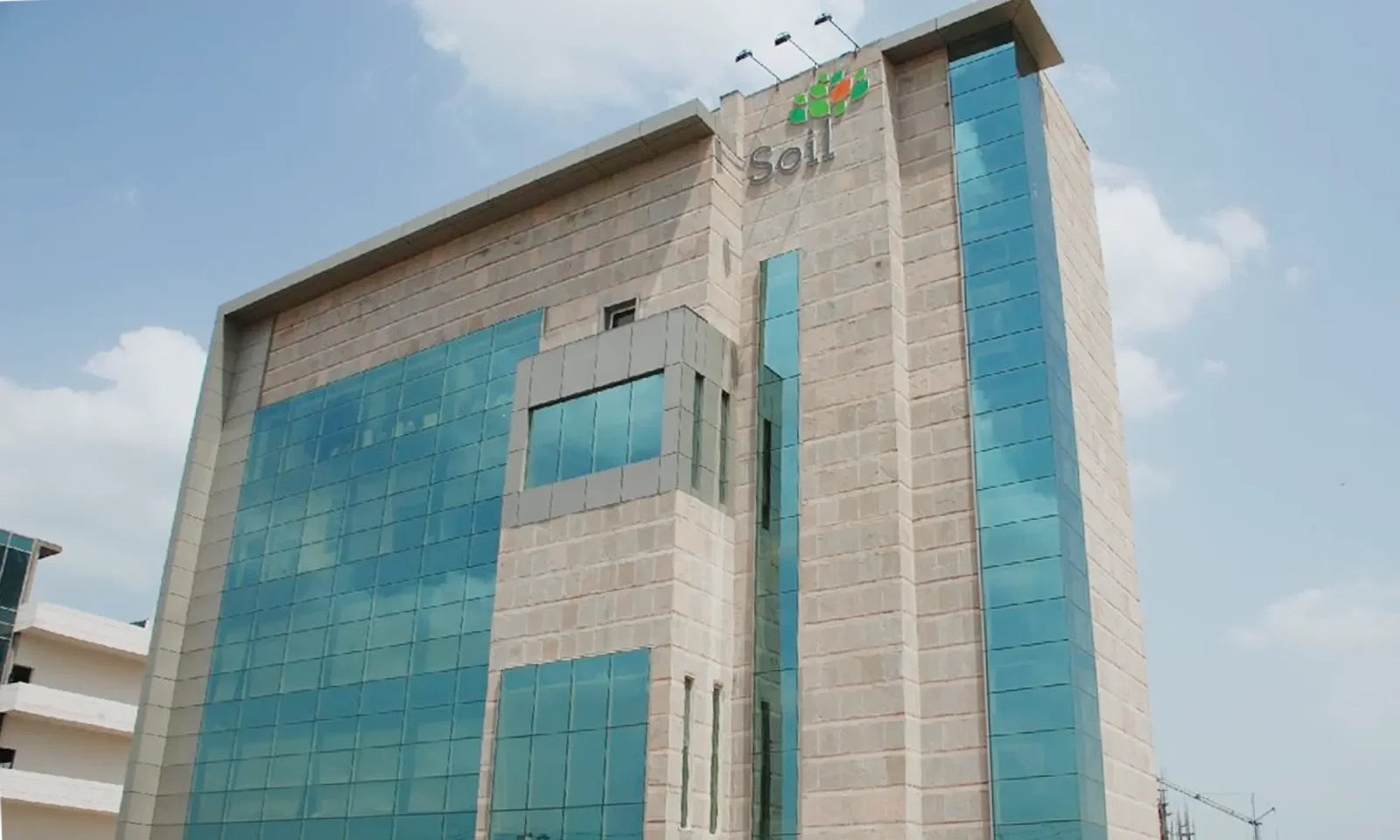
School of Inspired Leadership (SOIL), Gurgaon, now known as SOIL Institute of Management, is a management education institution established in 2008 with a strong focus on leadership development, experiential learning, innovation and responsible management.
SOIL was created with the participation of business leaders and organisations with the objective of developing future-ready professionals and leaders. Its approach combines management education with leadership development, design thinking, liberal arts, industry interaction and experiential learning.
SOIL offers a two-year PGDM designed primarily for fresh graduates and early-career candidates, along with a one-year PGPM for professionals with prior work experience and a one-year PGPM-HR for candidates interested in Human Resources.
The institute operates from campuses in the Gurugram-Manesar region of Haryana, with the PGDM campus located in Manesar and the PGPM programmes based in Gurgaon.
Why Choose School of Inspired Leadership (SOIL), Gurgaon for a PGDM?
School of Inspired Leadership (SOIL), Gurgaon offers industry-focused management education with an emphasis on leadership, innovation, experiential learning and professional development. Its management programmes are designed to combine classroom learning with real-world business exposure, case studies, projects, industry interaction and leadership experiences, helping students develop the skills needed to navigate modern business environments.
Established management institute with a strong leadership focus
Full-time postgraduate management programmes
AICTE-approved PGDM programme
Strong emphasis on leadership, innovation and entrepreneurship
Practical learning through projects, case studies and industry interaction
Corporate exposure through industry-led learning and mentorship
Focus on experiential learning and professional development
Opportunities to build communication, teamwork and decision-making skills
Located in the Gurgaon-Manesar business ecosystem
Career opportunities across consulting, marketing, finance, technology, operations, HR and entrepreneurship
Particular Details Institute Name School of Inspired Leadership (SOIL) Current Name SOIL Institute of Management Established 2008 Institute Type Private Management Institute Locati
Particular
Details
Institute Name
School of Inspired Leadership (SOIL)
Current Name
SOIL Institute of Management
Established
2008
Institute Type
Private Management Institute
Location
Gurgaon / Manesar, Haryana
PGDM Duration
2 Years
PGPM Duration
1 Year
PGPM-HR Duration
1 Year
Mode
Full-Time
PGDM Campus
Manesar, New Gurgaon
PGPM Campus
Gurgaon
PGPM-HR Campus
Gurgaon
PGDM Approval
AICTE-approved
PGDM Focus
Business, Design Thinking & Liberal Arts
PGPM Focus
Leadership & Management
PGPM-HR Focus
Human Resources
PGDM Work Experience
0–3 years
PGPM Work Experience
2+ years
PGPM-HR
Designed for aspiring HR professionals
SOIL describes its two-year PGDM as India's first programme integrating Business, Design Thinking and Liberal Arts, while its PGPM is positioned as a one-year accelerated management programme for experienced professionals.
SOIL can be considered by students looking for a management programme with a strong emphasis on experiential learning, leadership, design thinking, creativity and industry interact
SOIL can be considered by students looking for a management programme with a strong emphasis on experiential learning, leadership, design thinking, creativity and industry interaction.
Key Advantages
Established management institute with a leadership-focused academic approach.
AICTE-approved two-year PGDM.
Strong focus on experiential learning.
Business, Design Thinking and Liberal Arts integration.
Industry-oriented curriculum.
Leadership development programmes.
Corporate interaction.
Live projects and experiential assignments.
International exposure.
Strong focus on communication and collaboration.
PGDM option for freshers and early-career candidates.
One-year PGPM for experienced professionals.
Dedicated PGPM-HR for HR careers.
Gurgaon-Manesar location advantage.
Alumni network across multiple industries.
Focus on responsible and purpose-driven leadership.
SOIL's major management programmes include: PGDM – 2-Year Programme PGPM – 1-Year Programme PGPM-HR – 1-Year Programme The PGDM is targeted at freshers and candidates with limited
SOIL's major management programmes include:
PGDM – 2-Year Programme
PGPM – 1-Year Programme
PGPM-HR – 1-Year Programme
The PGDM is targeted at freshers and candidates with limited work experience, while the PGPM is designed for candidates with at least two years of prior work experience.
1. PGDM at SOIL
The two-year PGDM is SOIL's flagship programme for students seeking a full-time management education after graduation.
SOIL describes the programme as integrating Business, Design Thinking and Liberal Arts, with approximately 50% of the curriculum being experiential and industry immersive.
Duration: 2 Years Mode: Full-Time Location: Manesar, New Gurgaon Work Experience: 0–3 years Approval: AICTE Target Candidates: Freshers and early-career graduates Major Learning Ar
Duration: 2 Years
Mode: Full-Time
Location: Manesar, New Gurgaon
Work Experience: 0–3 years
Approval: AICTE
Target Candidates: Freshers and early-career graduates
Major Learning Areas
Marketing
Finance
Strategy
Operations
Entrepreneurship
Business Analytics
Design Thinking
Leadership
Liberal Arts
Organisational Behaviour
Business Communication
Innovation
Digital Business
PGDM Specialisation & Career Areas
Students can develop career capabilities across several management functions.
Marketing
Brand Management
Digital Marketing
Sales
Consumer Behaviour
Marketing Strategy
Finance
Corporate Finance
Financial Analysis
Investment Management
Financial Planning
Strategy
Business Strategy
Consulting
Competitive Analysis
Corporate Strategy
Analytics
Business Analytics
Data-Driven Decision Making
Business Intelligence
Market Analytics
Entrepreneurship
New Venture Creation
Startup Strategy
Innovation
Business Model Development
PGDM Eligibility
For the current PGDM admission cycle, candidates must generally:
Hold a bachelor's degree in any discipline.
Have at least 50% aggregate marks.
Have completed a minimum three-year undergraduate programme after 10+2.
Be a final-year student or graduate meeting the institute's academic requirements.
Have a valid score in an accepted aptitude examination.
SOIL states that freshers and candidates with less than three years of work experience are eligible for the two-year PGDM.
Entrance Exams Accepted for PGDM
SOIL's current PGDM admission information lists:
CAT
XAT
GMAT
CMAT
MAT
NMAT
SNAP
ATMA
The institute states that the best valid submitted score is considered, with NMAT and SNAP subject to the additional conditions specified by SOIL.
Candidates without an accepted aptitude-test score should check the current admission cycle for the institute's alternative assessment requirements.
Step 1: Submit Application Candidates complete the SOIL online application form and submit their academic, examination and achievement details. Step 2: Profile Shortlisting SOIL ev
Step 1: Submit Application
Candidates complete the SOIL online application form and submit their academic, examination and achievement details.
Step 2: Profile Shortlisting
SOIL evaluates the overall profile rather than relying only on examination scores.
The institute considers:
Academic performance
Leadership potential
Extracurricular activities
Intellectual ability
Work experience, if applicable
Step 3: Group Exercise / Design Thinking Assessment
Shortlisted candidates participate in an assessment designed to evaluate collaboration, creativity, problem-solving and leadership.
Step 4: Personal Interview
The Personal Interview assesses:
Communication
Career goals
Motivation
Leadership potential
Academic background
Programme fit
Step 5: Final Selection
The final selection is based on the institute's holistic evaluation framework.
PGDM Selection Weightage
For the current PGDM admission process, SOIL lists:
Selection Component
Weightage
Entrance Exam Score
35%
Academics
15%
Extracurricular Activities
5%
Work Experience
5%
Group Exercise & Personal Interview
40%
This makes the selection process broader than simply evaluating CAT/XAT/other entrance scores.
SOIL's published fee structure for the 2027–29 PGDM batch lists a total academic/programme fee of ₹17.20 lakh, excluding the refundable security deposit of ₹30,000.
SOIL's published fee structure for the 2027–29 PGDM batch lists a total academic/programme fee of ₹17.20 lakh, excluding the refundable security deposit of ₹30,000.
Installment Due Date Amount Enrolment Fees At the time of admission ₹2.10 lakh First Instalment On or before May 16, 2027 ₹4.00 lakh Second Instalment On or before September 5, 202
Installment
Due Date
Amount
Enrolment Fees
At the time of admission
₹2.10 lakh
First Instalment
On or before May 16, 2027
₹4.00 lakh
Second Instalment
On or before September 5, 2027
₹4.00 lakh
Third Instalment
On or before February 6, 2028
₹3.70 lakh
Fourth Instalment
On or before August 7, 2028
₹3.70 lakh
Total
₹17.20 lakh
The official SOIL page confirms the PGDM is a 24-month full-time programme commencing in June 2027
2. PGPM at SOIL
The Post Graduate Program in Management (PGPM) is a one-year full-time management programme designed primarily for professionals with prior work experience.
SOIL positions the PGPM as a leadership-oriented accelerated management programme with a strong emphasis on experiential learning and industry exposure.
Duration: 12 Months Mode: Full-Time Location: Gurgaon Work Experience: Minimum 2 years Target Candidates: Working professionals Focus: Leadership and Management SOIL states that ap
Duration: 12 Months
Mode: Full-Time
Location: Gurgaon
Work Experience: Minimum 2 years
Target Candidates: Working professionals
Focus: Leadership and Management
SOIL states that approximately 50% of the curriculum is experiential immersion based.
Candidates applying for the one-year PGPM generally need: A bachelor's degree from a recognised institution. At least 50% marks in graduation. At least 60% in Class 10 and Class 12
Candidates applying for the one-year PGPM generally need:
A bachelor's degree from a recognised institution.
At least 50% marks in graduation.
At least 60% in Class 10 and Class 12.
Minimum 2 years of prior work experience.
A valid accepted management entrance score.
SOIL currently lists CAT, XAT and NMAT scores for the PGPM, with SOIL's own aptitude test available for candidates who do not have one of the specified scores.
The PGPM selection process includes: 1. Application Submit academic, professional and entrance examination details. 2. Profile Evaluation SOIL considers: Academic record Profession
The PGPM selection process includes:
1. Application
Submit academic, professional and entrance examination details.
2. Profile Evaluation
SOIL considers:
Academic record
Professional experience
Leadership achievements
Extracurricular achievements
Career goals
3. Group Exercise
Candidates participate in a group exercise involving collaborative problem-solving.
4. Personal Interview
The interview evaluates:
Career aspirations
Leadership potential
Communication
Professional experience
Programme fit
5. Final Decision
Selected candidates receive an admission offer from SOIL.
3. PGPM-HR at SOIL
The Post Graduate Program in Management – Human Resources (PGPM-HR) is a one-year full-time programme designed for students and professionals interested in building careers in Human Resources.
Major Areas
Human Resource Management
Talent Management
Organisational Behaviour
Leadership
Employee Engagement
Learning & Development
HR Analytics
Talent Acquisition
Strategic HR
People Management
Career Opportunities
Graduates can pursue roles such as:
HR Business Partner
Talent Acquisition Specialist
HR Consultant
Learning & Development Professional
Employee Engagement Specialist
Talent Management Professional
HR Analytics Professional
People Operations Manager
SOIL lists PGPM-HR as a 12-month full-time programme in Gurgaon.
SOIL's published fee structure for the PGPM-HR programme lists a total fee of approximately ₹15.33 lakh, including GST and the refundable caution deposit of ₹30,000. Component Amou
SOIL's published fee structure for the PGPM-HR programme lists a total fee of approximately ₹15.33 lakh, including GST and the refundable caution deposit of ₹30,000.
Component
Amount Including GST
Tuition & Academic Fee
₹9,58,160
Programme Fee
₹5,39,166
Alumni Association Membership Fee
₹5,900
Refundable Caution Deposit
₹30,000
Total
₹15,33,226
The PGPM-HR is a 1-year full-time programme at SOIL's Gurgaon campus.
Note: The above fee excludes hostel/accommodation, books, course materials, Sidhbari Trip and other expenses. GST is payable with the respective fee components.
SOIL does not rely on a single publicly guaranteed CAT percentile cutoff for admission. Its selection process evaluates the overall candidate profile, including: Entrance examinati
SOIL does not rely on a single publicly guaranteed CAT percentile cutoff for admission.
Its selection process evaluates the overall candidate profile, including:
Entrance examination score
Academic performance
Extracurricular activities
Work experience
Group Exercise
Personal Interview
Leadership potential
Career clarity
For the PGDM, SOIL assigns 35% weightage to entrance examination scores and 40% to Group Exercise and Personal Interview performance.
Therefore, students should focus on building a strong overall profile rather than targeting only a particular unofficial cutoff.
SOIL reports placement outcomes across its PGDM and PGPM programmes. The institute's current programme pages highlight: PGDM Average CTC: ₹11.17 LPA Highest CTC: ₹20.7 LPA Recruite
SOIL reports placement outcomes across its PGDM and PGPM programmes.
The institute's current programme pages highlight:
PGDM
Average CTC: ₹11.17 LPA
Highest CTC: ₹20.7 LPA
Recruiters include organisations such as BlackRock, S&P Global, Infosys and Accenture.
PGPM
Average CTC: ₹12.3 LPA
Highest CTC: ₹21.8 LPA
Recruiters include Aditya Birla, Infosys and Accenture.
These are institute-reported figures and should be interpreted according to the relevant placement batch and programme. Students should review the latest official placement report for programme-specific outcomes.
SOIL's current PGPM information reports: Highest CTC: ₹21.8 LPA Average CTC: ₹12.3 LPA Top 25% CTC: ₹18.8 LPA Top 50% Average: ₹15.4 LPA 70+ Visiting Firms 2,000+ Alumni SOIL also
SOIL's current PGPM information reports:
Highest CTC: ₹21.8 LPA
Average CTC: ₹12.3 LPA
Top 25% CTC: ₹18.8 LPA
Top 50% Average: ₹15.4 LPA
70+ Visiting Firms
2,000+ Alumni
SOIL also states that the average CTC increased by approximately 2.2 times after PGPM for the reported placement data.
Major Recruiting Sectors
SOIL students can explore career opportunities across sectors such as:
Consulting
Business Consulting
Management Consulting
Strategy
Advisory
Technology
IT Services
Technology
Digital Business
Analytics
Finance
Banking
Financial Services
Investment
FinTech
Consumer & Retail
FMCG
Retail
E-Commerce
Consumer Services
Human Resources
Talent Acquisition
HR Consulting
Learning & Development
People Operations
Industry Exposure
Industry interaction is an important part of SOIL's teaching approach.
Students can gain exposure through:
Industry Projects
Live Projects
Guest Lectures
Corporate Interactions
Business Simulations
Internships
Case Studies
Leadership Sessions
Corporate Mentoring
SOIL describes its programmes as strongly experiential, with a significant portion of the curriculum built around industry immersion.
Experiential Learning
SOIL differentiates its management education through experiential learning.
Students may participate in:
Design Thinking Workshops
Live Business Projects
Social Impact Projects
Leadership Activities
Industry Immersions
Outdoor Learning
Business Simulations
Team-Based Projects
This approach is designed to develop practical problem-solving and leadership skills alongside academic knowledge.
Design Thinking & Liberal Arts
One of the distinctive features of SOIL's two-year PGDM is its integration of:
Business
Design Thinking
Liberal Arts
The institute describes the programme as India's first PGDM integrating these three areas.
This approach can help students develop:
Creative Thinking
Problem-Solving
Empathy
Innovation
Communication
Strategic Thinking
Business Understanding
Leadership Development
Leadership development is central to SOIL's educational philosophy.
Students are encouraged to develop:
Self-Awareness
Communication
Decision-Making
Collaboration
Ethical Leadership
Strategic Thinking
Emotional Intelligence
Social Responsibility
SOIL describes its objective as developing leaders with character, competence and enthusiasm who can contribute to sustainable organisations.
SOIL incorporates international and cross-cultural exposure into its management education. Students can gain an understanding of: Global Business International Markets Cross-Cultur
SOIL incorporates international and cross-cultural exposure into its management education.
Students can gain an understanding of:
Global Business
International Markets
Cross-Cultural Management
Global Leadership
International Business Practices
The institute also highlights experiential journeys and international immersion as part of its broader leadership-development approach.
Entrepreneurship & Innovation
SOIL encourages students to explore entrepreneurship, innovation and new business models.
Students can develop capabilities in:
Startup Strategy
Business Model Development
Innovation
Design Thinking
Market Research
New Venture Creation
Business Planning
Entrepreneurial Leadership
This can be particularly useful for students interested in startups and innovation-driven businesses.
SOIL provides facilities designed around collaborative and experiential management education.
SOIL provides facilities designed around collaborative and experiential management education.
Smart Classrooms Learning Spaces Library Digital Resources Discussion Areas Student Activity Spaces Accommodation Facilities Sports & Recreation Collaborative Work Areas Corporate
Smart Classrooms
Learning Spaces
Library
Digital Resources
Discussion Areas
Student Activity Spaces
Accommodation Facilities
Sports & Recreation
Collaborative Work Areas
Corporate Interaction Spaces
The residential learning environment supports teamwork and collaborative projects.
SOIL encourages students to participate in academic, cultural and leadership activities. Students can engage in: Clubs Student Committees Business Competitions Cultural Events Lead
SOIL encourages students to participate in academic, cultural and leadership activities.
Students can engage in:
Clubs
Student Committees
Business Competitions
Cultural Events
Leadership Activities
Workshops
Seminars
Social Impact Initiatives
Sports
Industry Events
These activities help students develop:
Teamwork
Leadership
Communication
Networking
Creativity
Decision-Making
Location Advantage
SOIL's campuses are located in the Gurgaon-Manesar region, one of India's major corporate and startup hubs.
The location provides access to organisations in:
Consulting
IT
Banking
Financial Services
FMCG
E-Commerce
Manufacturing
Startups
Professional Services
This can provide students with opportunities for internships, corporate interaction and networking.
Marketing Brand Manager Marketing Executive Digital Marketing Professional Sales Manager Business Development Manager Finance Financial Analyst Corporate Finance Executive Investme
Marketing
Brand Manager
Marketing Executive
Digital Marketing Professional
Sales Manager
Business Development Manager
Finance
Financial Analyst
Corporate Finance Executive
Investment Analyst
Banking Professional
Finance Associate
Consulting
Business Analyst
Consulting Analyst
Strategy Associate
Management Consultant
Analytics
Business Analyst
Data Analyst
Business Intelligence Analyst
Analytics Consultant
Human Resources
HR Business Partner
Talent Acquisition Specialist
HR Consultant
Learning & Development Professional
People Operations Manager
Entrepreneurship
Founder
Startup Consultant
Business Development Professional
Innovation Manager
SOIL vs Traditional MBA/PGDM
SOIL follows a somewhat different approach from a conventional management programme.
Feature
SOIL Approach
Learning
Experiential
Leadership
Strong emphasis
Design Thinking
Integrated into PGDM
Liberal Arts
Integrated into PGDM
Industry Exposure
High focus
Case-Based Learning
Yes
Live Projects
Yes
International Exposure
Available
Entrepreneurship
Strong focus
Communication
Strong focus
Students who prefer a highly experiential and leadership-oriented learning environment may find SOIL particularly relevant.
Who Should Choose SOIL?
SOIL can be a suitable option for students who want:
Experiential management education.
Strong leadership development.
Design Thinking exposure.
Liberal Arts integration.
Industry-oriented learning.
Entrepreneurship exposure.
Corporate interaction.
International exposure.
A two-year PGDM as a fresher.
A one-year PGPM after gaining work experience.
A specialised HR management programme.
School of Inspired Leadership (SOIL), Gurgaon, now operating as SOIL Institute of Management, is a management education institution established in 2008 with a distinctive focus on
School of Inspired Leadership (SOIL), Gurgaon, now operating as SOIL Institute of Management, is a management education institution established in 2008 with a distinctive focus on leadership, experiential learning, innovation and responsible management.
Its two-year PGDM is designed for freshers and early-career candidates and integrates Business, Design Thinking and Liberal Arts, while its one-year PGPM is aimed at professionals with at least two years of work experience. SOIL also offers a dedicated PGPM-HR programme.
For the published 2027–29 PGDM fee structure, SOIL lists ₹17.20 lakh in academic/programme fees plus a refundable security deposit. The published PGPM fee is approximately ₹15.33 lakh including GST and refundable caution deposit, while PGPM-HR is listed at ₹14.50 lakh.
SOIL can be considered by students who value experiential learning, leadership development, design thinking, innovation and strong industry exposure alongside traditional management education.
Got questions?
Frequently Asked Questions
What is the School of Inspired Leadership (SOIL)?
School of Inspired Leadership (SOIL), now presented as SOIL Institute of Management, is a management institute in the Gurgaon/Gurugram region offering PGDM, PGPM and PGPM-HR programmes. Its programmes emphasise leadership, experiential learning, innovation, design thinking and industry exposure.
When was the School of Inspired Leadership established?
SOIL Institute of Management was established as a management education institution with the involvement of a consortium of 32 Indian and multinational companies. The institute focuses on developing leaders through management education, experiential learning and values-based leadership.
For the SOIL Admission 2026 cycle, the institute offers: Two-Year PGDM One-Year PGPM One-Year PGPM-HR The PGDM is designed primarily for freshers and candidates with limited work e
For the SOIL Admission 2026 cycle, the institute offers:
Two-Year PGDM
One-Year PGPM
One-Year PGPM-HR
The PGDM is designed primarily for freshers and candidates with limited work experience, while the PGPM is designed for experienced professionals.
4. What is the SOIL PGDM duration?
The SOIL PGDM is a two-year full-time programme conducted at the Manesar, New Gurgaon campus.
The programme integrates Business, Design Thinking and Liberal Arts, with an emphasis on creative problem-solving and experiential learning.
5. What is the SOIL PGPM duration?
The SOIL PGPM is a one-year full-time management programme conducted in Gurgaon.
It is designed primarily for professionals with 2+ years of work experience who want an accelerated management education and leadership development experience.
The SOIL PGPM-HR is a one-year full-time programme designed for graduates aspiring to careers in Human Resources and people leadership. It focuses on developing skills relevant to
The SOIL PGPM-HR is a one-year full-time programme designed for graduates aspiring to careers in Human Resources and people leadership.
It focuses on developing skills relevant to HR management, leadership, organisational development and people strategy.
For SOIL PGDM Admission 2026, the programme is designed for freshers and graduates with 0–3 years of work experience. Candidates are evaluated through a profile-based approach that
For SOIL PGDM Admission 2026, the programme is designed for freshers and graduates with 0–3 years of work experience.
Candidates are evaluated through a profile-based approach that considers their academic background, work experience and overall profile. SOIL also provides a profile-based eligibility checker for PGDM and PGPM applicants.
The SOIL PGPM is primarily intended for professionals with 2+ years of full-time work experience. The institute's current programme information describes the PGPM as a one-year acc
The SOIL PGPM is primarily intended for professionals with 2+ years of full-time work experience.
The institute's current programme information describes the PGPM as a one-year accelerated MBA-equivalent programme for professionals with 2+ years of work experience.
For SOIL Admission 2026, the institute's admissions information lists accepted scores including: CAT XAT GMAT NMAT MAT The applicable examination year and score requirements can va
For SOIL Admission 2026, the institute's admissions information lists accepted scores including:
CAT
XAT
GMAT
NMAT
MAT
The applicable examination year and score requirements can vary by programme and admission cycle, so candidates should check the relevant SOIL Admission 2026 criteria.
SOIL follows a profile-based admission approach, rather than relying exclusively on a single published entrance-test percentile. The SOIL PGDM Cutoff 2026 should therefore not be p
SOIL follows a profile-based admission approach, rather than relying exclusively on a single published entrance-test percentile.
The SOIL PGDM Cutoff 2026 should therefore not be presented as an unofficial fixed percentile. The institute evaluates candidates using their academic, professional and co-curricular profile along with applicable entrance-test scores.
The SOIL PGDM Admission Process 2026 involves profile evaluation and assessment of the candidate's overall suitability for the programme. The process can consider: Academic perform
The SOIL PGDM Admission Process 2026 involves profile evaluation and assessment of the candidate's overall suitability for the programme.
The process can consider:
Academic performance
Entrance examination score
Work experience
Professional achievements
Co-curricular achievements
Leadership potential
Overall profile
SOIL describes its selection approach as profile-based shortlisting.
The SOIL PGPM Selection Process is designed to identify candidates with leadership potential, purpose and the ability to contribute meaningfully to organisations. The institute eva
The SOIL PGPM Selection Process is designed to identify candidates with leadership potential, purpose and the ability to contribute meaningfully to organisations.
The institute evaluates candidates on their academic, professional and co-curricular achievements, along with their overall fit with SOIL's leadership-oriented approach.
The SOIL PGDM Fees 2026 should be taken from the latest official fee schedule applicable to the relevant admission batch. SOIL's official programme page provides programme, admissi
The SOIL PGDM Fees 2026 should be taken from the latest official fee schedule applicable to the relevant admission batch.
SOIL's official programme page provides programme, admissions and fee information, but the currently accessible page does not display a consolidated 2026–28 fee figure in the programme overview. Therefore, an unverified amount should not be presented as the final SOIL PGDM Fees 2026.
The SOIL PGPM Fees 2026 should likewise be confirmed from the latest official fee schedule or programme brochure before publishing a final amount. For website content, it is safer
The SOIL PGPM Fees 2026 should likewise be confirmed from the latest official fee schedule or programme brochure before publishing a final amount.
For website content, it is safer to state that the SOIL PGPM fee is applicable according to the official programme fee structure rather than using an outdated or unofficial figure.
SOIL's programmes are conducted in the Gurgaon/Gurugram and Manesar campuses, and accommodation arrangements may form part of the student experience depending on the programme. For
SOIL's programmes are conducted in the Gurgaon/Gurugram and Manesar campuses, and accommodation arrangements may form part of the student experience depending on the programme.
For website content, the SOIL Hostel Fees 2026 and room details should be checked against the latest programme-specific accommodation information before publishing an exact amount.
The SOIL PGDM provides exposure to major management areas including: Marketing Finance Operations Analytics Sales Human Resources Strategy Design Thinking Business Innovation SOIL
The SOIL PGDM provides exposure to major management areas including:
Marketing
Finance
Operations
Analytics
Sales
Human Resources
Strategy
Design Thinking
Business Innovation
SOIL describes its PGDM as a programme integrating Business, Design Thinking and Liberal Arts.
17. Does SOIL offer Business Analytics?
Yes. SOIL Business Analytics is an important component of its management education.
The PGDM includes Analytics among its areas of specialisation, while the curriculum also incorporates technology, problem-solving and data-oriented business learning.
18. Is SOIL good for Finance?
Yes. SOIL Finance can be considered by students interested in financial services, corporate finance, investment, banking and related business functions.
Finance is one of the specialisation areas available within the SOIL PGDM.
19. Is SOIL good for Consulting and Strategy?
Yes. SOIL Consulting and Strategy can be relevant career pathways for students interested in problem-solving, business transformation and management consulting.
SOIL's emphasis on design thinking, business problem-solving, experiential learning and leadership can help students develop skills relevant to consulting careers.
20. Is SOIL good for Product Management?
The SOIL PGDM can be relevant for students targeting Product Management and technology-oriented roles.
The programme integrates design thinking, analytics, business strategy and innovation, which are useful areas for product-oriented careers. SOIL's current PGDM batch profile also shows representation from Product & Tech backgrounds.
Yes. SOIL industry exposure is a major component of its learning model. Students can gain practical experience through: Live industry projects Experiential learning Case-based prob
Yes. SOIL industry exposure is a major component of its learning model.
Students can gain practical experience through:
Live industry projects
Experiential learning
Case-based problem solving
Simulations
Industry interactions
Leadership immersions
Design-thinking activities
SOIL states that around 50% of the PGDM curriculum is experiential and industry immersive.
Yes. SOIL international exposure is supported through its global partnerships and international learning opportunities. The institute lists global partners and provides internation
Yes. SOIL international exposure is supported through its global partnerships and international learning opportunities.
The institute lists global partners and provides international exposure as part of its broader management education ecosystem.
SOIL provides career management and placement support through its Career Management Services (CMS). Its published placement information currently highlights a ₹21.8 LPA highest CTC
SOIL provides career management and placement support through its Career Management Services (CMS).
Its published placement information currently highlights a ₹21.8 LPA highest CTC, ₹12.3 LPA average CTC, ₹18.8 LPA CTC for the top 25%, and ₹15.4 LPA average for the top 50% placed students in the cited placement data. These figures should be clearly labelled according to the applicable placement report rather than presented as guaranteed 2026 outcomes.
After completing a SOIL PGDM or PGPM, graduates can explore careers in: Consulting Finance Marketing Business Analytics Product Management Technology Strategy Operations Human Reso
After completing a SOIL PGDM or PGPM, graduates can explore careers in:
Consulting
Finance
Marketing
Business Analytics
Product Management
Technology
Strategy
Operations
Human Resources
Business Development
General Management
Entrepreneurship
SOIL's published placement information shows opportunities across sectors including IT & ITES, BFSI, Consulting, Manufacturing and Pharma.
Yes. SOIL scholarships may be available to eligible candidates depending on the programme and applicable admission cycle. Candidates should check the latest SOIL Scholarship 2026 c
Yes. SOIL scholarships may be available to eligible candidates depending on the programme and applicable admission cycle.
Candidates should check the latest SOIL Scholarship 2026 criteria, scholarship amount and eligibility conditions before applying.
26. Is SOIL PGDM equivalent to an MBA?
SOIL's own website describes its PGDM as a 2-year MBA programme and its PGPM as a 1-year accelerated MBA-equivalent programme. However, for website content, it is best to retain the official programme name Post Graduate Diploma in Management (PGDM) rather than replacing it with MBA.
27. Is SOIL PGDM suitable for freshers?
Yes. The SOIL PGDM is designed for freshers and graduates with 0–3 years of work experience.
The current SOIL programme information specifically positions the two-year PGDM for candidates at the beginning of their professional careers.
28. Is SOIL PGPM suitable for freshers?
The SOIL PGPM is primarily designed for experienced professionals with 2+ years of work experience.
Fresh graduates should generally consider the SOIL PGDM if they meet its applicable eligibility requirements.
29. Is SOIL worth it in 2026?
For students and professionals looking for management education with a strong emphasis on leadership, experiential learning, design thinking, innovation and industry exposure, SOIL Institute of Management 2026 can be an option worth considering.