Symbiosis Institute of Computer Studies & Research (SICSR), Pune
SICSR Pune MBA Admission 2026: Check MBA fees, SNAP cut off, eligibility, admission process, selection criteria, placements and key details for the 2026–28 batch.
Symbiosis Institute of Computer Studies & Research (SICSR), Pune: MBA IT, Fees, Admissions, Placements, Cut-off, Rankings, Campus Life & More
About Symbiosis Institute of Computer Studies & Research (SICSR), Pune
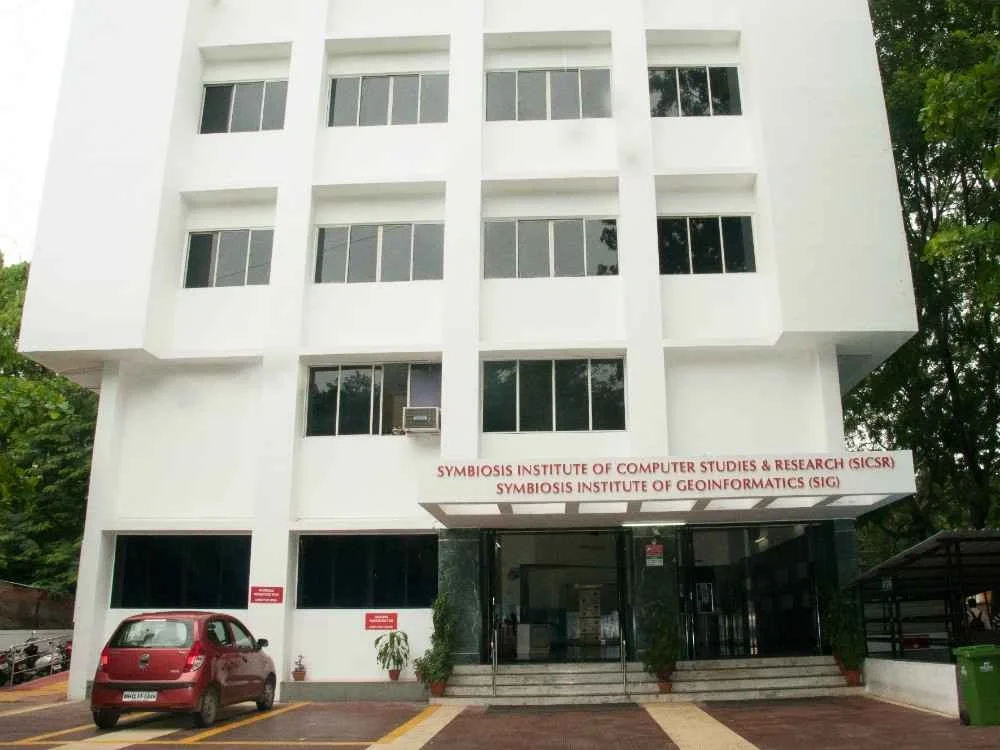
Symbiosis Institute of Computer Studies & Research (SICSR), Pune is a specialized higher-education institute under Symbiosis International (Deemed University), focused on the intersection of technology, information systems and management education. The institute has a long-standing legacy in technology-focused education and is located in Model Colony, Pune.
SICSR is particularly known for its two-year full-time MBA in Information Technology (MBA-IT), which combines management fundamentals with technology-oriented learning. The programme is designed for students interested in careers such as business analysis, IT consulting, data analytics, product management, IT infrastructure and software project management.
The institute also offers an MBA in Digital Transformation, M.Sc. in Computer Applications, BCA (Honours/Honours with Research) and BBA in Information Technology (Honours/Honours with Research).
Symbiosis Institute of Computer Studies & Research (SICSR), Pune offers technology-focused management education that combines business management with information technology, analytics and digital business. The programme provides students with opportunities to develop managerial and technical skills through classroom learning, projects, case studies, industry interaction and practical exposure, preparing them for technology-driven business careers.
Part of the reputed Symbiosis International (Deemed University) network
Two-year full-time MBA programme
Admission through the SNAP examination
Strong combination of management, technology and IT learning
Focus on digital business, analytics and technology management
Practical exposure through projects, case studies and industry interaction
Industry-oriented curriculum with corporate exposure
Strong corporate connections and active alumni network
Located in Pune, a major technology and education hub
Career opportunities across IT consulting, business analytics, technology management, digital business and other sectors
Particular Details Institute Name Symbiosis Institute of Computer Studies & Research Popular Name SICSR Pune Institute Type Private Deemed University Institute Parent University Sy
Particular
Details
Institute Name
Symbiosis Institute of Computer Studies & Research
Popular Name
SICSR Pune
Institute Type
Private Deemed University Institute
Parent University
Symbiosis International (Deemed University)
Location
Model Colony, Pune, Maharashtra
Flagship Programme
MBA in Information Technology
MBA Duration
2 Years
Mode
Full-Time
Entrance Exam
SNAP
Selection Process
SNAP + GE-PI
MBA-IT Intake
60 Students
Minimum Graduation Requirement
50% marks
SC/ST Requirement
45% marks
Major Focus Areas
IT, Data Analytics, Digital Business & Management
MBA-IT 2026–28 Academic Fee
₹11.40 lakh + ₹20,000 refundable institute deposit
Hostel & Mess
Available, subject to availability and accommodation type
The official SICSR information confirms the 60-student MBA-IT intake, eligibility criteria and SNAP-based selection process.
SICSR is particularly suitable for students who want to build careers at the intersection of business management and technology.
SICSR is particularly suitable for students who want to build careers at the intersection of business management and technology.
Specialized focus on technology-enabled management education. Part of the Symbiosis education ecosystem. Two-year full-time MBA in Information Technology. SNAP-based admission proc
Specialized focus on technology-enabled management education.
Part of the Symbiosis education ecosystem.
Two-year full-time MBA in Information Technology.
SNAP-based admission process.
Strong emphasis on experiential learning.
Industry-oriented technology curriculum.
Data analytics and emerging technology exposure.
IT infrastructure and software management learning.
Business analysis and technology consulting exposure.
Mandatory industry internship during the MBA-IT programme.
Case studies, projects, hackathons and practical learning.
Industry expert and alumni interaction.
Pune location with access to a major IT and business ecosystem.
Dedicated placement support.
Opportunities across technology, consulting, analytics and management.
Additional MBA option in Digital Transformation.
SICSR currently offers programmes across undergraduate and postgraduate technology-management domains.
SICSR currently offers programmes across undergraduate and postgraduate technology-management domains.
MBA in Information Technology MBA in Digital Transformation M.Sc. in Computer Applications Undergraduate Programmes BCA (Honours / Honours with Research) BBA in Information Technol
MBA in Information Technology
MBA in Digital Transformation
M.Sc. in Computer Applications
Undergraduate Programmes
BCA (Honours / Honours with Research)
BBA in Information Technology (Honours / Honours with Research)
For MBA aspirants, the two major programmes to consider are MBA-IT and MBA-Digital Transformation.
MBA in Information Technology
The MBA in Information Technology is a two-year, full-time programme that combines management education with information technology and business applications.
The programme is designed to prepare students for technology-driven business roles and includes practical learning through projects, case studies, role plays, quizzes, hackathons and industry exposure.
24 Months / 2 Years Degree Awarded Master of Business Administration (Information Technology) Entrance Exam SNAP – Symbiosis National Aptitude Test Selection Process SNAP + Group E
24 Months / 2 Years
Degree Awarded
Master of Business Administration (Information Technology)
Entrance Exam
SNAP – Symbiosis National Aptitude Test
Selection Process
SNAP + Group Exercise + Personal Interaction (GE-PI)
MBA-IT Specializations
The MBA-IT programme provides students with opportunities to develop expertise in specialized areas.
SICSR's programme information identifies areas including:
Banking & Financial Markets
Data Analytics
IT Infrastructure Management
Software Process Management
Marketing
Students select their specialization as part of the programme structure.
1. Data Analytics
Students develop skills in:
Business Intelligence
Data Analysis
Python
Data Management
Data Visualization
Business Analytics
AI & Machine Learning
2. Banking & Financial Markets
Areas include:
Corporate Finance
Financial Management
Asset Liability Management
Banking Technology
Credit Management
Financial Markets
3. IT Infrastructure Management
Students learn about:
IT Infrastructure
Enterprise Systems
Cloud Technologies
Technology Management
IT Operations
Digital Platforms
4. Software Process Management
This area focuses on:
Software Engineering
Agile Practices
Software Project Management
Quality Management
Business Process Integration
Technology-enabled business solutions
5. Marketing
Students can develop knowledge in:
Digital Marketing
Customer Analytics
Product Marketing
Business Development
Brand Management
Technology-driven marketing
MBA-IT Curriculum
SICSR's curriculum combines technology and management subjects.
Technology Subjects
Relational Database Management Systems
Software Engineering
Python
Web Development
PHP
Object-Oriented Analysis & Design
Cloud & Big Data
AI & Machine Learning
Business Intelligence
Data Analysis
Digital Transformation
IT Governance
Technology in Business
Management Subjects
Digital Marketing
Business Statistics
Enterprise Resource Planning
Business Case Analysis
Talent Acquisition
Entrepreneurship
Research Methodology
Business Strategy
Financial Management
Management Practices
The current programme structure includes Python, AI/ML for business management, cloud and big data, IT business analysis, digital transformation and entrepreneurship.
Experiential Learning
One of the major strengths of SICSR's MBA-IT programme is its emphasis on practical learning.
Students participate in:
Case Studies
Live Projects
Pilot Projects
Hackathons
Role Plays
Business Simulations
Industry Sessions
Field Visits
Technology Workshops
Guest Lectures
MOOCs
Value-Added Courses
The programme also includes an industry internship during Semester IV, providing students with practical exposure before graduation.
Candidates applying for the MBA-IT programme should have: A bachelor's degree from a recognized university/institution. Minimum 50% aggregate marks or equivalent grade. Minimum 45%
Candidates applying for the MBA-IT programme should have:
A bachelor's degree from a recognized university/institution.
Minimum 50% aggregate marks or equivalent grade.
Minimum 45% marks for SC/ST candidates.
A valid SNAP score.
Candidates appearing in their final year may apply subject to applicable university requirements.
The official SICSR eligibility page specifies a 50% graduation requirement and 45% for Scheduled Caste/Scheduled Tribe candidates.
Entrance Exam Accepted
Admission to the MBA-IT programme is based on the Symbiosis National Aptitude Test (SNAP) followed by SICSR's selection process.
SNAP Institute application Shortlisting Group Exercise Personal Interaction Final merit list SICSR officially lists SNAP + GE-PI as the selection procedure for MBA-IT.
SNAP
Institute application
Shortlisting
Group Exercise
Personal Interaction
Final merit list
SICSR officially lists SNAP + GE-PI as the selection procedure for MBA-IT.
SICSR does not publish a permanently fixed SNAP cut-off because the effective shortlisting level can vary depending on: SNAP performance Number of applicants Programme intake Candi
SICSR does not publish a permanently fixed SNAP cut-off because the effective shortlisting level can vary depending on:
SNAP performance
Number of applicants
Programme intake
Candidate profile
Overall competition
GE-PI performance
Indicative SNAP Percentile Guide
SNAP Percentile
Admission Position
98+
Excellent
96–98
Very Strong
94–96
Competitive
92–94
Possible but profile-dependent
Below 92
More challenging
Note: These are indicative guidance ranges, not an official 2026 SICSR cut-off. The actual shortlist percentile may vary each year.
Step 1: Register for SNAP Candidates must register for the SNAP examination. Step 2: Register for SICSR Applicants must select SICSR and the relevant programme while completing the
Step 1: Register for SNAP
Candidates must register for the SNAP examination.
Step 2: Register for SICSR
Applicants must select SICSR and the relevant programme while completing the institute registration process.
Step 3: Appear for SNAP
Candidates take the SNAP examination conducted by Symbiosis International (Deemed University).
Step 4: Shortlisting
Candidates are shortlisted for the next stage based on SNAP performance and applicable selection criteria.
Step 5: Group Exercise
Shortlisted candidates participate in the Group Exercise (GE).
Step 6: Personal Interaction
Candidates participate in the Personal Interaction (PI) round.
Step 7: Final Merit List
The final selection is based on the institute's prescribed selection criteria.
Step 8: Admission & Fee Payment
Selected candidates complete document verification and pay the required programme fees.
SICSR has published the fee structure for the MBA-IT 2026–28 batch. For Indian students, the academic fee is ₹2,85,000 per installment, with two installments per academic year. A r
SICSR has published the fee structure for the MBA-IT 2026–28 batch. For Indian students, the academic fee is ₹2,85,000 per installment, with two installments per academic year. A refundable institute deposit of ₹20,000 is payable with the first installment.
Year Academic Fee First Year ₹5,70,000 Second Year ₹5,70,000 Total Academic Fee ₹11,40,000 Refundable Institute Deposit ₹20,000 Total Including Deposit ₹11,60,000 The institute sta
Year
Academic Fee
First Year
₹5,70,000
Second Year
₹5,70,000
Total Academic Fee
₹11,40,000
Refundable Institute Deposit
₹20,000
Total Including Deposit
₹11,60,000
The institute states that fees are subject to applicable rules and that the fee structure may change for future academic years.
For the 2026–27 academic year, SICSR lists Model Colony campus accommodation charges separately from academic fees. For three-sharing accommodation, the listed hostel fee is ₹1,23,
For the 2026–27 academic year, SICSR lists Model Colony campus accommodation charges separately from academic fees. For three-sharing accommodation, the listed hostel fee is ₹1,23,200 per year, while annual mess fees are ₹1,19,600. A refundable hostel deposit of ₹20,000 is also listed.
Component
2026–27 Amount
Three-Sharing Hostel
₹1,23,200
Mess
₹1,19,600
Hostel Deposit
₹20,000
Hostel + Mess + Deposit
₹2,62,800
Hostel charges depend on accommodation type and availability, and the institute notes that hostel and mess fees can increase by up to 15% annually.
Students may explore scholarships and financial assistance available through the Symbiosis ecosystem and applicable government schemes. For international students entering in 2026,
Students may explore scholarships and financial assistance available through the Symbiosis ecosystem and applicable government schemes.
For international students entering in 2026, SICSR's fee information also lists Symbiosis Golden Jubilee Scholarships and free-ships for eligible foreign-national students.
Students should verify scholarship eligibility, application deadlines and applicable conditions before applying.
SICSR provides placement assistance through its dedicated career and placement ecosystem. The MBA-IT programme is designed around technology-management roles, allowing graduates to
SICSR provides placement assistance through its dedicated career and placement ecosystem.
The MBA-IT programme is designed around technology-management roles, allowing graduates to pursue opportunities in:
IT Consulting
Business Analytics
Product Management
Technology Consulting
Business Analysis
Data Analytics
IT Infrastructure
Software Project Management
Digital Transformation
Banking Technology
Marketing Technology
The institute itself highlights career roles such as Business Analyst, IT Management Consultant, IT Architect, Data Processing Manager, Systems Software Manager and Product Manager for MBA-IT graduates.
Website note: Avoid publishing a specific average or highest package unless you are using the latest official SICSR placement report. Placement figures can change from year to year.
The programme's combination of technology and management can open opportunities across technology-driven business functions. Popular Job Roles Business Analyst IT Business Analyst
The programme's combination of technology and management can open opportunities across technology-driven business functions.
Popular Job Roles
Business Analyst
IT Business Analyst
Data Analyst
Business Intelligence Analyst
IT Consultant
Technology Consultant
Product Manager
Product Analyst
IT Project Manager
Software Project Manager
IT Infrastructure Manager
Digital Transformation Consultant
Technology Strategy Analyst
Systems Analyst
Business Process Analyst
Industries Hiring MBA-IT Graduates
Graduates can explore opportunities in:
Information Technology
Consulting
Banking & Financial Services
E-Commerce
FinTech
Software
Data & Analytics
Digital Services
Telecommunications
Manufacturing
Healthcare Technology
Retail
Startups
SICSR also offers a two-year full-time MBA in Digital Transformation. The programme integrates management principles with emerging digital technologies and is aimed at students int
SICSR also offers a two-year full-time MBA in Digital Transformation. The programme integrates management principles with emerging digital technologies and is aimed at students interested in leading technology-driven transformation.
Key Features
2-year full-time programme
SNAP entrance examination
Minimum 50% graduation marks
45% for SC/ST candidates
AICTE-approved degree
Mandatory full-time industry internship
Dedicated placement support
Focus on digital technologies and transformation
The programme fee currently listed by SICSR is ₹12.13 lakh plus a ₹20,000 institute deposit.
SICSR is located at: 1st Floor, Atur Centre, Gokhale Cross Road, Model Colony, Pune – 411016. The institute provides students with facilities designed around technology-enabled lea
SICSR is located at:
1st Floor, Atur Centre, Gokhale Cross Road, Model Colony, Pune – 411016.
The institute provides students with facilities designed around technology-enabled learning.
Technology-enabled classrooms Computer facilities Digital learning resources Project-based learning spaces Seminar and presentation facilities Internet-enabled academic infrastruct
Technology-enabled classrooms
Computer facilities
Digital learning resources
Project-based learning spaces
Seminar and presentation facilities
Internet-enabled academic infrastructure
Learning Resources
Students benefit from:
Digital resources
Academic databases
Online learning platforms
Technology resources
Research material
MOOCs
Student Life at SICSR
SICSR provides students with opportunities to participate in academic and co-curricular activities.
Student Activities
Hackathons
Quizzes
Case Competitions
Technology Events
Management Competitions
Workshops
Guest Lectures
Industry Sessions
Student Clubs
Cultural Activities
Alumni Interaction
These activities help students develop:
Leadership
Teamwork
Communication
Analytical Thinking
Problem-Solving
Technology Skills
Business Acumen
Industry Exposure
Industry interaction is an important part of SICSR's MBA-IT learning approach.
Students gain exposure through:
Industry experts
Alumni sessions
Guest lectures
Field visits
Live projects
Technology workshops
Value-added courses
Internships
Case-based learning
SICSR specifically emphasizes practical learning and industry-oriented curriculum design in its MBA-IT pedagogy.
SICSR's teaching methodology combines management education with hands-on technology learning. Teaching Methods Case Studies Interactive Sessions Role Plays Projects Practical Assig
SICSR's teaching methodology combines management education with hands-on technology learning.
Teaching Methods
Case Studies
Interactive Sessions
Role Plays
Projects
Practical Assignments
Hackathons
Quizzes
Industry Sessions
Flipped Classrooms
MOOCs
Experiential Learning
This approach helps students understand both how technology works and how businesses use technology to solve problems.
Research & Innovation
SICSR's academic environment focuses strongly on technology and its applications in business.
Key Research & Learning Areas
Artificial Intelligence
Machine Learning
Data Analytics
Business Intelligence
Cloud Computing
Big Data
Digital Transformation
IT Governance
Software Engineering
Information Systems
Technology Management
Business Process Management
Alumni Network
Being part of the wider Symbiosis ecosystem provides students with access to an established alumni community across technology, management, consulting, finance and entrepreneurship.
Alumni interaction can support students through:
Career Guidance
Industry Networking
Mentorship
Guest Sessions
Professional Connections
Career Awareness
Industry Insights
Rankings & Recognition
SICSR's key strength is its specialized positioning in technology-oriented management education within the Symbiosis ecosystem.
For website content, it is preferable to highlight verified institutional credentials and programme approvals rather than quoting rankings without the ranking year and ranking body.
The institute's current programme information highlights its technology-focused education, industry relevance and specialized MBA offerings.
For the 2026–28 MBA-IT batch, SICSR's published admission schedule was linked to the SNAP 2025 examination cycle. The institute listed the following key dates: Event Date SNAP & Pr
For the 2026–28 MBA-IT batch, SICSR's published admission schedule was linked to the SNAP 2025 examination cycle. The institute listed the following key dates:
Event
Date
SNAP & Programme Registration Begins
1 August 2025
Last Date for SNAP Application
20 November 2025
SNAP Test 1
6 December 2025
SNAP Test 2
14 December 2025
SNAP Test 3
20 December 2025
SNAP Result
9 January 2026
SICSR Registration Deadline
15 January 2026
GE-PI Shortlist
21 January 2026
GE-PI
February 2026
First Merit List
24 February 2026
First Merit List Fee Deadline
4 March 2026
Note: These dates belong to the 2026–28 admission cycle and should not be reused as the 2027–29 schedule. Candidates should check the official SICSR admission page for the next cycle.
SICSR's MBA-IT can be particularly attractive to students who want to combine management education with technology skills.
SICSR's MBA-IT can be particularly attractive to students who want to combine management education with technology skills.
Specialized technology-management curriculum Symbiosis brand Pune IT ecosystem Industry internship Data analytics exposure Technology consulting opportunities Product management op
Specialized technology-management curriculum
Symbiosis brand
Pune IT ecosystem
Industry internship
Data analytics exposure
Technology consulting opportunities
Product management opportunities
Business analyst career paths
Digital transformation focus
Students should evaluate ROI using the latest placement report, total programme cost, accommodation expenses and their intended career path.
Why SICSR Pune Stands Out
SICSR differentiates itself from conventional MBA institutes through its technology-first approach to management education.
Major Advantages
Specialized MBA in Information Technology.
MBA in Digital Transformation.
SNAP-based admission.
Technology and management integration.
Data analytics exposure.
AI/ML and cloud learning.
Industry-oriented curriculum.
Mandatory industry internship.
Practical project-based learning.
Hackathons and technology events.
Pune's strong IT ecosystem.
Symbiosis academic environment.
Career opportunities in technology and management.
Strong focus on digital business transformation.
SICSR Pune vs Traditional MBA Colleges
Parameter
SICSR Pune
Traditional MBA Institute
Core Focus
Technology + Management
General Management
Flagship Programme
MBA-IT
MBA/PGDM
Technology Exposure
Very Strong
Depends on curriculum
Data Analytics
Strong
Usually elective
AI/ML Exposure
Included in curriculum
Depends on institute
IT Consulting
Strong career pathway
Available
Product Management
Strong potential
Available
Digital Transformation
Strong
Varies
Entrance Exam
SNAP
CAT/XAT/CMAT etc.
SICSR is therefore particularly relevant for students who want a management career with strong technology exposure.
Symbiosis Institute of Computer Studies & Research (SICSR), Pune is a specialized institute for students who want to build careers at the intersection of technology and management.
Symbiosis Institute of Computer Studies & Research (SICSR), Pune is a specialized institute for students who want to build careers at the intersection of technology and management. Its flagship MBA in Information Technology combines business education with areas such as data analytics, software engineering, IT management, digital transformation, cloud, AI/ML and business analysis.
The two-year MBA-IT programme uses experiential learning through projects, case studies, hackathons, industry interaction and a mandatory industry internship. Admission is based on SNAP followed by Group Exercise and Personal Interaction.
With a 2026–28 academic fee of ₹11.40 lakh plus a refundable ₹20,000 institute deposit, SICSR can be considered by students seeking a specialized technology-management MBA within the Symbiosis ecosystem.
1. What is SICSR Pune? Symbiosis Institute of Computer Studies & Research (SICSR), Pune is a Symbiosis institute specialising in management education with a strong focus on IT, tec
1. What is SICSR Pune?
Symbiosis Institute of Computer Studies & Research (SICSR), Pune is a Symbiosis institute specialising in management education with a strong focus on IT, technology and digital business.
Its postgraduate programmes combine business management with technology-oriented learning, making SICSR particularly relevant for students interested in careers in IT management, business analytics, digital transformation, technology consulting and product management.
For SICSR Admission 2026, the major postgraduate management programmes are: MBA (Information Technology) MBA (Digital Transformation) SICSR also offers programmes including M.Sc. (
For SICSR Admission 2026, the major postgraduate management programmes are:
MBA (Information Technology)
MBA (Digital Transformation)
SICSR also offers programmes including M.Sc. (Computer Applications), BCA (Honours/Honours with Research) and BBA (IT) (Honours/Honours with Research).
3. What is the SICSR MBA duration?
Both SICSR MBA (IT) and MBA (Digital Transformation) are two-year, full-time postgraduate programmes.
The MBA (IT) programme has a 24-month duration and follows a semester-based structure.
For the MBA programmes, SICSR Admission 2026 uses the Symbiosis National Aptitude Test (SNAP) as the entrance examination. The MBA (IT) selection process includes: SNAP score Group
For the MBA programmes, SICSR Admission 2026 uses the Symbiosis National Aptitude Test (SNAP) as the entrance examination.
The MBA (IT) selection process includes:
SNAP score
Group Exercise (GE)
Personal Interaction (PI)
Candidates must also satisfy the programme's eligibility requirements.
For SICSR MBA Eligibility 2026, candidates must be graduates from a recognised university/institution with: Minimum 50% marks or equivalent grade 45% marks or equivalent grade for
For SICSR MBA Eligibility 2026, candidates must be graduates from a recognised university/institution with:
Minimum 50% marks or equivalent grade
45% marks or equivalent grade for SC/ST candidates
Candidates from different academic backgrounds can apply, subject to the prescribed eligibility requirements.
SICSR does not publish a single guaranteed SICSR Cutoff 2026 that can be treated as a fixed admission percentile. Admission depends on the candidate's SNAP performance and subseque
SICSR does not publish a single guaranteed SICSR Cutoff 2026 that can be treated as a fixed admission percentile.
Admission depends on the candidate's SNAP performance and subsequent GE-PI selection process.
Therefore, students should avoid treating an unofficial SNAP percentile as a guaranteed SICSR Pune Cutoff 2026.
The required SNAP percentile can vary depending on competition and the applicant pool in a particular admission cycle. A candidate's final selection is not based only on the SNAP s
The required SNAP percentile can vary depending on competition and the applicant pool in a particular admission cycle.
A candidate's final selection is not based only on the SNAP score; performance in the Group Exercise and Personal Interaction also matters.
For the MBA (Information Technology) 2026–28 batch, the official fee structure for Indian students lists: Academic Fee: ₹2,85,000 per annum Refundable Institute Deposit: ₹20,000 Fi
For the MBA (Information Technology) 2026–28 batch, the official fee structure for Indian students lists:
Academic Fee: ₹2,85,000 per annum
Refundable Institute Deposit: ₹20,000
First-year payable amount: ₹5,90,000 including the deposit
Total academic fees for two years: ₹11,40,000
Total programme academic fee including the ₹20,000 refundable institute deposit: ₹11,60,000
Hostel and mess charges are additional.
For the MBA (Digital Transformation) 2026–28, the academic fee is ₹3,18,400 per annum, plus a ₹20,000 refundable institute deposit.
For the Model Colony Campus, the published 2026–27 hostel and mess structure for MBA (IT) lists: Mess fee: ₹1,19,600 per year Hostel deposit: ₹20,000 refundable Three-sharing hoste
For the Model Colony Campus, the published 2026–27 hostel and mess structure for MBA (IT) lists:
Mess fee: ₹1,19,600 per year
Hostel deposit: ₹20,000 refundable
Three-sharing hostel: ₹1,23,200 per year
Hostel charges vary according to accommodation type, and the institute states that hostel and mess fees may increase by up to 15% each year.
The SICSR MBA (IT) curriculum provides specialisation options in areas such as: Banking & Financial Markets Data Analytics IT Infrastructure Management Marketing Software Project M
The SICSR MBA (IT) curriculum provides specialisation options in areas such as:
Banking & Financial Markets
Data Analytics
IT Infrastructure Management
Marketing
Software Project Management
The curriculum combines management subjects with technology-oriented courses.
11. Is SICSR good for Data Analytics?
Yes. SICSR Data Analytics is a strong option for students who want to combine management education with data and technology.
The MBA (IT) curriculum includes subjects such as:
Basic Business Statistics for Data Analysis
Python
Python for Data Science
Cloud and Big Data
AI and ML for Business Management
Generative AI and use cases
This makes the programme relevant for careers involving business analytics, data-driven decision-making and technology management.
12. Is SICSR good for IT Management?
Yes. SICSR IT Management is one of the institute's core strengths.
Students study areas including:
Software Engineering
IT Governance
Enterprise Resource Planning
Technology in Business
IT Infrastructure
Business Process Integration
Digital Transformation
The programme aims to prepare students for technology-oriented management and business roles.
13. Is SICSR good for Digital Transformation?
Yes. SICSR offers a dedicated MBA in Digital Transformation, designed around the intersection of management, digital technology and business transformation.
The curriculum covers:
Artificial Intelligence
Cloud Computing
Business Intelligence
Data Analytics
Blockchain
IoT
Digital Business Models
Technology-driven Innovation
Yes. SICSR internships provide students with practical exposure. For MBA (IT), students undergo an industry internship during Semester IV, providing an opportunity to apply classro
Yes. SICSR internships provide students with practical exposure.
For MBA (IT), students undergo an industry internship during Semester IV, providing an opportunity to apply classroom concepts to real business and technology problems.
The MBA (Digital Transformation) also includes a mandatory full-time industry internship.
15. Does SICSR provide industry exposure?
Yes. SICSR industry exposure includes:
Industry internships
Live projects
Case studies
Technology projects
Guest sessions
Industry expert interactions
Field visits
Value-added courses
Experiential learning
The institute specifically emphasises hands-on training and industry-oriented learning.
SICSR's curriculum has a global orientation and incorporates areas such as international business and global strategy. Students also study technology and management issues from a g
SICSR's curriculum has a global orientation and incorporates areas such as international business and global strategy.
Students also study technology and management issues from a global business perspective, particularly within the MBA (Digital Transformation) curriculum.
17. Does SICSR support entrepreneurship?
Yes. Entrepreneurship is incorporated into the MBA (IT) curriculum.
Students can develop skills in:
Innovation
Business planning
Technology entrepreneurship
Problem-solving
Business model development
Leadership
Entrepreneurship is specifically included as a course in the MBA (IT) programme structure.
Graduates of SICSR MBA can explore careers such as: Business Analyst Data Analyst IT Management Consultant Product Manager IT Architect Technology Consultant Project Manager Busine
Graduates of SICSR MBA can explore careers such as:
Business Analyst
Data Analyst
IT Management Consultant
Product Manager
IT Architect
Technology Consultant
Project Manager
Business Intelligence Analyst
Digital Transformation Consultant
Technology Manager
Software Project Manager
Digital Business Analyst
The institute specifically identifies roles including Business Analyst, IT Management Consultant, IT Architect, Data Processing Manager, Systems Software Manager and Product Manager for MBA (IT) graduates.
SICSR provides placement support through its dedicated placement process. However, placement statistics such as average CTC, highest CTC and placement percentage should be presente
SICSR provides placement support through its dedicated placement process.
However, placement statistics such as average CTC, highest CTC and placement percentage should be presented using the latest officially reported graduating-batch data rather than treating them as guaranteed outcomes for students joining the 2026–28 batch.
For website publishing, it is better to update the placement section whenever SICSR releases the latest official placement report.
The general SICSR Admission Process 2026 is: Register for SNAP. Appear for the SNAP examination. Apply to SICSR through the applicable Symbiosis admission process. Meet the program
The general SICSR Admission Process 2026 is:
Register for SNAP.
Appear for the SNAP examination.
Apply to SICSR through the applicable Symbiosis admission process.
Meet the programme eligibility criteria.
Get shortlisted based on the applicable selection criteria.
Participate in Group Exercise (GE).
Participate in Personal Interaction (PI).
Receive the final admission decision.
Complete fee payment and admission formalities.
For MBA (IT), SICSR officially lists SNAP + Online Group Exercise + Personal Interaction as its selection procedure.
The SICSR Selection Process 2026 includes: SNAP Group Exercise Personal Interaction Candidates are evaluated on their overall suitability for the programme rather than only their e
The SICSR Selection Process 2026 includes:
SNAP
Group Exercise
Personal Interaction
Candidates are evaluated on their overall suitability for the programme rather than only their entrance-test performance.
22. Is SICSR Pune worth it in 2026?
For students interested in a management career at the intersection of business and technology, SICSR Pune can be a strong option to consider.